
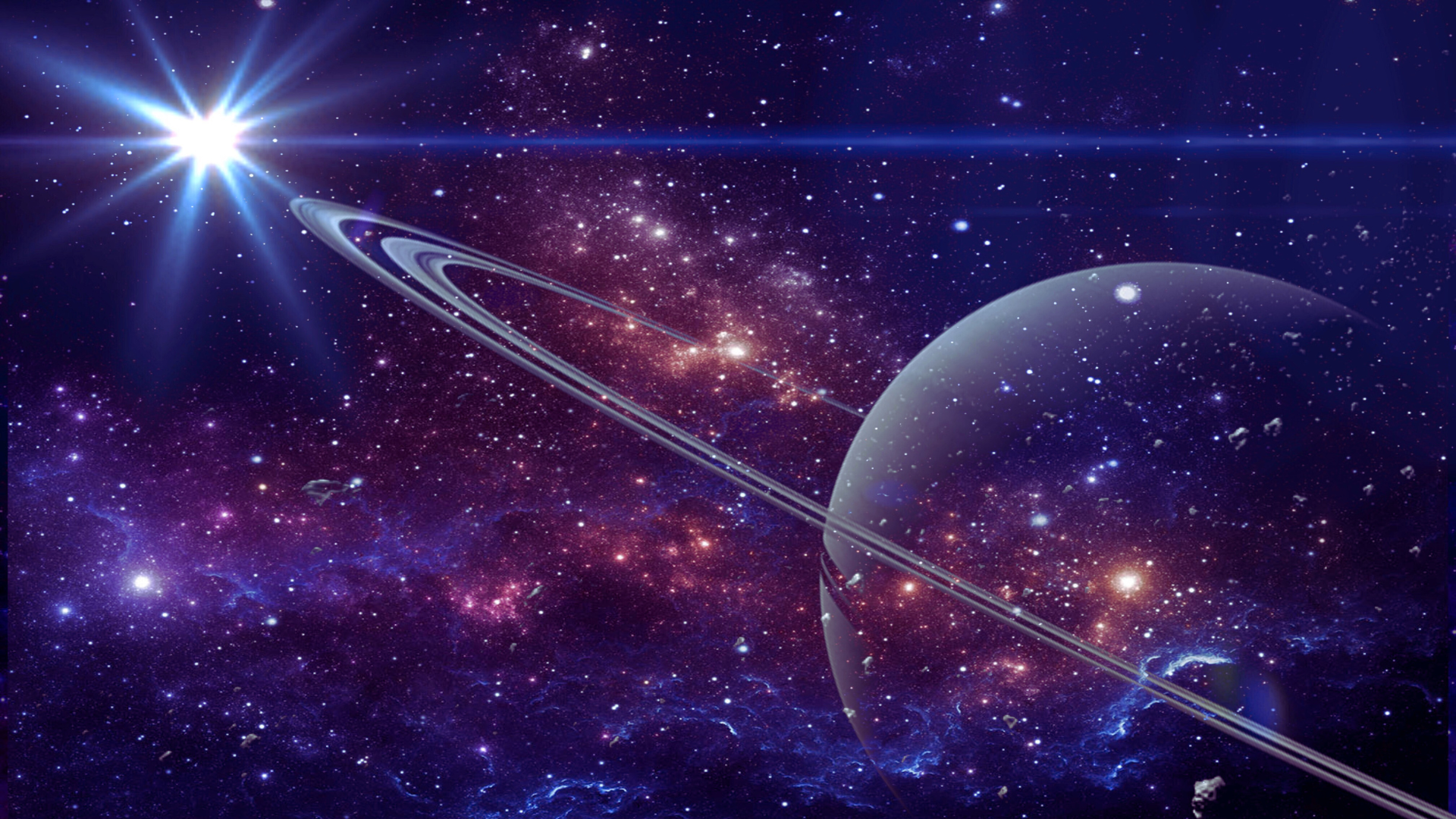
Astronomy opens a window to the vast universe, revealing distant galaxies and planets that spark curiosity and wonder. By utilizing powerful telescopes, astronomers can observe celestial bodies millions of light-years away, deepening our understanding of the cosmos. This exploration not only enhances scientific knowledge but also inspires a fascination with the mysteries of space.
As researchers peer into the depths of the universe, they uncover new worlds and phenomena that challenge existing theories. The discoveries of exoplanets orbiting distant stars and the intricate structures of galaxies reshape our understanding of existence. This ongoing quest fuels both scientific inquiry and human imagination.
The journey through astronomy offers insights that connect humanity to the broader universe. Observations made today could lead to answers about the origins of life and the fate of galaxies, emphasizing the importance of continued exploration and observation.
Understanding the Cosmos
The universe is vast and complex, characterized by fundamental concepts like cosmology and the Big Bang theory. Together, these areas reveal the origins and structure of the universe, shedding light on its continual expansion and the remnants of its early moments.
Cosmology and Astronomy
Cosmology is the scientific study of the universe’s origin, evolution, and eventual fate. It employs astronomical observations to formulate theories about the cosmos. Cosmologists examine patterns in cosmic structures, such as galaxies and galaxy clusters, to understand their formation and interactions.
Astronomy complements cosmology by providing the tools to observe celestial phenomena. Through telescopes and space missions, astronomers capture data about distant stars, planets, and galaxies. The discovery of the cosmic microwave background radiation, a remnant from the early universe, has been pivotal. This radiation offers valuable insights into the conditions shortly after the Big Bang.
The Big Bang Theory
The Big Bang theory describes the universe’s emergence from an extremely hot and dense state roughly 13.8 billion years ago. Initially, the universe was a singularity, densely packed and undergoing rapid expansion.
As it expanded, the universe cooled, allowing protons and neutrons to form. These particles later combined to create hydrogen and helium. This initial formation set the stage for stars and galaxies to develop over billions of years.
The expanding universe continues to be a central concept in cosmology. Observations of distant galaxies reveal that they are moving away, supporting the theory. By studying this expansion and the cosmic microwave background, scientists can trace the universe’s history and gauge its future trajectory.
Galactic Exploration and Classification
Galactic exploration involves studying a variety of galaxies, including the Milky Way and distant galaxies revealed by advanced telescopes. Classification systems help astronomers organize galaxies based on their features and formation processes.
Characterizing Galaxies
Galaxies are typically classified into three main types: spiral, elliptical, and irregular.
- Spiral Galaxies have arm-like structures that emerge from a central bulge. The Milky Way is a prime example, showcasing a flat disk of stars and gas.
- Elliptical Galaxies appear as smooth, featureless ellipsoids. They contain older stars, with little to no ongoing star formation.
- Irregular Galaxies lack a distinct shape, often forming through gravitational interactions or collisions with other galaxies.
The Hubble Ultra Deep Field provided images of thousands of distant galaxies, allowing scientists to identify these categories across different cosmic epochs.
Galaxy Formation and Evolution
Galaxy formation theories include the hierarchical model and monolithic collapse. The hierarchical model suggests that smaller structures merge over time to form larger galaxies, while the monolithic collapse theory suggests that galaxies form from collapsing gas clouds. Galaxy evolution may be influenced by factors such as interactions with nearby galaxies or dark matter.
Distant galaxies often provide insights into younger phases of galaxy evolution, revealing formation conditions and processes that no longer exist in nearby counterparts. Observational studies continue to refine knowledge about how galaxies develop and change through time.
Advanced Observational Instruments
Advanced observational instruments play a crucial role in modern astronomy. They enable detailed exploration of distant galaxies and planets, expanding humanity’s understanding of the universe.
Telescopes and Technology
Telescopes are central to astronomical discovery. The Hubble Space Telescope has revolutionized observational astronomy since its launch in 1990. It provides high-resolution images in visible and ultraviolet light.
The James Webb Space Telescope, launched recently, focuses on infrared observations. It can penetrate dust clouds to observe star formation and distant galaxies. Another important instrument is the Spitzer Space Telescope, capable of infrared imaging and spectroscopy, which enhances knowledge of galactic structures and exoplanets.
Technological advancements, such as adaptive optics and interferometry, improve telescope performance. Adaptive optics mitigate atmospheric distortion, resulting in clearer images. Such innovations enhance researchers’ ability to study the universe in unprecedented detail.
The Role of Satellites in Astronomy
Satellites contribute significantly to astronomical observations by providing platforms for various scientific instruments. They allow for continuous data collection without atmospheric interference. Satellites like those used in the Hubble Deep Field observations demonstrate their capability. This deep-field imaging revealed thousands of galaxies in a small area, showcasing the vastness of space.
The deployment of satellites extends beyond optical observations. Many satellites are equipped with radio, infrared, and X-ray detectors. This diversity enables comprehensive studies of cosmic phenomena, from cosmic microwave background radiation to black hole emissions, further enriching the field of astronomy.
The Study of Planets Beyond Our Solar System
The exploration of planets outside the solar system, known as exoplanets, is a crucial aspect of contemporary astronomy. It encompasses understanding their properties, formation, and how they fit into the larger cosmological picture.
Planetary Science
Planetary science investigates the formation and evolution of planets, including those beyond the solar system. Researchers examine the atmospheres, compositions, and orbits of these distant worlds.
Key areas of focus include:
- Atmospheric studies: Analyzing the chemical composition and weather patterns.
- Surface conditions: Understanding geology and surface features through various imaging techniques.
- Habitability criteria: Identifying planets within the “habitable zone,” where liquid water might exist.
Planetary scientists utilize tools such as spectrometers, which discern light spectra to identify atmospheric components. This data helps in determining whether these planets could support life.
Discoveries of Exoplanets
The study of exoplanets has progressed significantly since the first confirmed detection in the 1990s. Various methods are employed, including:
- Transit method: Observing the dimming of a star as a planet passes in front of it.
- Radial velocity: Measuring star wobbles caused by gravitational pulls of orbiting planets.
As of now, thousands of exoplanets have been confirmed, showcasing a diversity that challenges previous notions about planetary systems. Discoveries include:
- Hot Jupiters: Gas giants close to their stars with extreme temperatures.
- Super-Earths: Rocky planets larger than Earth but smaller than gas giants.
These findings expand knowledge of planetary formation and hint at potential interactions with dark matter and black holes, influencing their evolution over time.
Leave a Reply